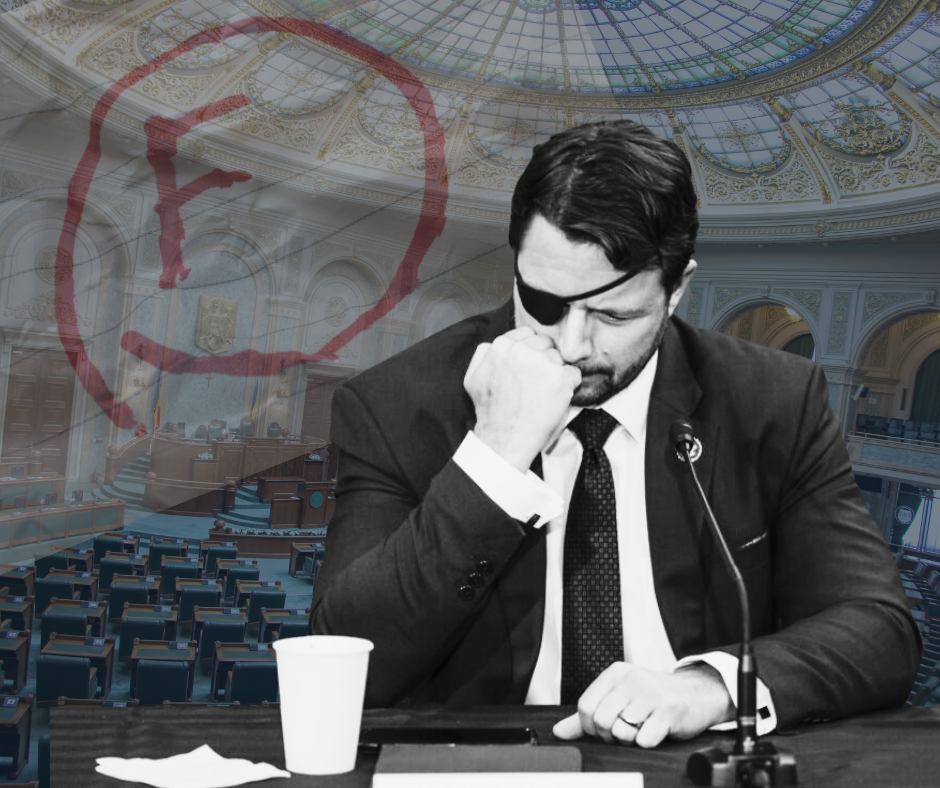
We Sent Crenshaw to Washington.
He Disappointed.
Now Texas Can Choose Better.
The Proof Is in the Policy: See for Yourselves Why TX-02 Conservatives Are Turning to Steve Toth on March 3.
Dan Crenshaw has faced criticism for supporting federal “red flag” provisions and voting to expand surveillance authorities that many 2A advocates view as constitutional compromises.
- Gun-rights groups like Ammo.com and GOA have specifically labeled him “anti-2A” on high-profile votes.
- Red Flag Rhetoric: Following major shootings in 2019, Crenshaw stated he was “open” to state-level red flag laws.
- H.R. 4350 (2022 NDAA): Crenshaw voted Yea on the final passage of this defense bill, which contained a provision (Section 529) allowing military courts to issue “protective orders” that could include seizure of firearms.
- The TAPS Act (H.R. 838): Crenshaw co-sponsored this bill, which proposed a national strategy for “behavioral threat assessment” to identify individuals potentially on a “pathway to violence.”
- FISA & Citizen Surveillance: Crenshaw voted to reauthorize Section 702 of the Foreign Intelligence Surveillance Act. Groups like GOA and the NRA have warned that these expansive surveillance powers allow for the warrantless collection of data on Americans, which could facilitate the creation of an illegal national gun registry.
- H.R. 7888 (Biggs Amendment): Crenshaw voted no on the high-profile amendment offered by Rep. Andy Biggs, which would have required a warrant to search the Section 702 database for information belonging to U.S. citizens. This amendment failed on a tie vote of 212–212. 2A advocacy groups, criticized this opposition, warning that warrantless “backdoor searches” allow for the collection of sensitive data on law-abiding gun owners.
Steve Toth has established himself as a “Texas First” constitutionalist by leading the charge for Second Amendment Sanctuaries and authoring legislation to criminalize federal overreach.
- Earned CD-2 endorsement from GOA for his uncompromising support of the Second Amendment.
- HB 2622 (2nd Amendment Sanctuary State): Representative Toth was co-author of the 2021 law that effectively “nullifies” federal gun control within Texas. It prohibits state and local agencies from enforcing any new federal firearm regulations that violate the Second Amendment.
- In 2013, Steve Toth pioneered the 2A Sanctuary movement by authoring HB 1076, the “Texas Firearm Protection Act,” which sought to criminalize the enforcement of federal gun bans. This legislation passed the Texas House nearly a decade before the “Sanctuary State” concept became law.
- HB 1927 (Constitutional Carry): Toth was a co-author of the landmark 2021 legislation that restored the right of law-abiding Texans to carry handguns without a state-issued license, removing a significant barrier to self-defense.
- HB 2282 (Restricting Federal Prosecution Assistance): Toth authored this bill to prohibit district and county attorneys from assisting the federal government in the prosecution or enforcement of federal statutes and regulations that attempt to regulate firearms, accessories, or ammunition.
- HB 3036 (Prohibiting Financial Discrimination Against Firearms Industry): Toth authored this bill to prohibit financial institutions from discriminating against lawful firearms and ammunition industry companies based solely on their engagement in constitutionally protected commerce.
- HB 3 (Armed Guard Mandate): Toth voted to require at least one armed security officer at every public school campus to protect students. By ensuring a permanent armed presence on every campus, Toth prioritized immediate student safety and deterrence against threats.
- HB 1177 (Emergency Carry): Toth voted to allow law-abiding citizens to carry firearms without a permit during mandatory evacuations following a natural disaster. This legislation protects the fundamental right to self-defense for families fleeing crisis situations without the barrier of permit requirements.
Dan Crenshaw has faced intense criticism for a legislative record that frequently prioritizes multibillion-dollar foreign aid packages over immediate physical enforcement at the Texas border. His record is defined by consistent support for federalized immigration programs and a pattern of voting against Republican-led cuts to migration funding.
- H.R. 8035: Crenshaw voted Yea on this $61 billion aid package to secure Ukraine’s borders while domestic border security remained unresolved. This vote is frequently cited by “America First” advocates as proof of prioritizing foreign security over Texas sovereignty.
- H.R. 4665 (Perry Amendment): Crenshaw voted No on the amendment offered by Rep. Scott Perry, which sought to cut $2.5 billion in funding from the Migration and Refugee Assistance (MRA) account. This vote is frequently cited by border hawks as proof that he supports funding the very programs that encourage and reward illegal migration.
- H.R. 2670 (Gaetz Amendment): Crenshaw voted No on the amendment prohibiting federal funds for security assistance to Ukraine. While U.S. families face record inflation, he has consistently backed massive aid packages — totaling over $113 billion — prioritizing the defense of foreign borders over immediate American interests.
- Mayorkas Impeachment: Crenshaw faced criticism for being notably absent during a key impeachment vote concerning DHS Secretary Alejandro Mayorkas. Critics and “Texas First” advocates argue that his lack of consistent, aggressive leadership on this issue allowed the architect of the border crisis to remain in power longer than necessary.
- H.R. 2157 (Spending Without Security): During the height of the 2019 border crisis, Crenshaw voted to pass a $19 billion supplemental spending bill that contained no designated funding for border wall construction or enforcement resources. 2A and border security groups labeled this a “missed opportunity” to force the federal government to prioritize Texas’s safety over bureaucratic spending.
Steve Toth has established himself as a pioneer of the “Texas First” movement, leading the charge to treat the border crisis as a formal invasion nearly a decade before it became a mainstream policy. His leadership focuses on reclaiming state sovereignty through the criminalization of illegal entry and the aggressive protection of Texas land from foreign interests.
- Texans for Strong Borders (CD-2 Endorsement): Toth earned the exclusive endorsement of Texans for Strong Borders for his 2026 campaign for Congressional District 2. The organization named Toth a “Border Champion,” citing his consistent “America First” stance on border security and a perfect “100” rating on their 89th Texas Legislature Member Ratings.
- Border Invasion Identification (2014): Toth led the charge on border security by formally identifying the border crisis as a “full-blown invasion” during a Montgomery County Commissioners Court meeting in 2014. He challenged federal inaction nearly a decade before it became a mainstream policy position, advocating for local and state authorities to use their “general welfare and public safety” powers to stop the release of illegal immigrants into Texas communities.
- HB 3612 (Ending Birthright Citizenship Abuse): Toth authored this landmark legislation to establish that a child born in Texas is not considered a U.S. citizen if neither parent is a citizen of the United States. The bill also mandates that Texas birth certificates include spaces to record the citizenship status of both the mother and father, providing a direct state-level challenge to the current interpretation of birthright citizenship and ensuring that state documents accurately reflect legal status.
- SB 4 (State-Led Enforcement & Illegal Entry): Toth co-sponsored and championed this landmark legislation, which makes it a state crime to enter Texas illegally from a foreign nation and empowers state law enforcement to arrest and deport trespassers.
- Improper Entry (HB 1017): Toth authored this legislation to create a new state-level criminal offense for individuals who enter or attempt to enter Texas from a foreign nation at unauthorized locations or evade federal inspection. The bill classifies improper entry as a Class A misdemeanor and establishes escalating penalties for repeat offenders, including state jail and first-degree felonies.
- Illegal Alien Incarceration (2024): Toth demanded accountability from the House Corrections Committee for the mounting costs of housing illegal immigrants in Texas jails and prisons.
- HB 20 (Texas Border Protection Unit): Toth co-authored this legislation to create a specialized, state-led law enforcement unit dedicated to repelling illegal crossings and arresting those who violate Texas sovereignty. Border hawks praise this as a necessary step to secure the state when federal authorities refuse to act.
- SB 17 (Foreign Leasehold Loopholes): Toth authored and passed a critical amendment to close a massive loophole in the foreign land ownership bill. While the original bill allowed foreign entities to bypass ownership bans through “leasehold interests” of up to 99 years, Toth’s amendment slashed that limit to just one year. This move ensures that hostile foreign actors cannot gain long-term, effective control of Texas land through century-long leases, preserving Texas’s sovereignty and agricultural security.
Dan Crenshaw has faced criticism for a record that many medical freedom advocates view as an expansion of federal oversight and government-led mandates. His legislative history is marked by support for a national vaccine database and defense policies that allowed for the discharge of military personnel based on vaccination status.
- H.R. 550 (Immunization Infrastructure Modernization Act): Crenshaw voted Yea to authorize $400 million in federal funding for a national vaccine database. Critics and medical privacy advocates argue this legislation creates the infrastructure for unchecked government surveillance of personal health decisions.
- NDAA (Military Vaccine Discharges): Crenshaw voted for defense authorization legislation that allowed for the discharge of military service members who declined the COVID-19 vaccine. This position has been heavily criticized by those who believe the federal government overstepped its authority by penalizing service members for exercising medical autonomy.
- Conflict with the “Medical Freedom” Wing: Crenshaw has been publicly critical of the House Freedom Caucus —the wing of the party most closely aligned with the medical liberty movement — calling them “performance artists”. This public divide is often cited as evidence of his alignment with a more moderate, establishment-centered approach to health policy.
Steve Toth has established himself as a leader in the medical liberty movement by authoring landmark protections for individual bodily autonomy and health privacy. His leadership focuses on penalizing coercive workplace mandates and ensuring that Texans have the right to access experimental treatments without government interference.
- Texans for Vaccine Choice (CD-2 Endorsement): Toth earned the recommendation of Texans for Vaccine Choice for his 2026 campaign for Congressional District 2. The organization named Toth a “steadfast warrior for medical liberty,” citing his proven record in the Texas Legislature as a “vaccine choice champion” and his commitment to defending individual medical autonomy in Washington, D.C.
- SB 7 (Vaccine Mandate Penalties): Toth authored and passed a critical amendment to create a $50,000 per incident penalty for businesses that make the COVID-19 vaccine a requirement for employment. This move provided teeth to Texas’s medical freedom laws, ensuring that no Texan is forced to choose between their job and their bodily autonomy.
- HB 138 (Health Privacy Act): Toth authored this legislation to stop employers from discriminating against employees based on their private vaccine status. By codifying health privacy, Toth protected workers from being “locked out” of the economy based on their personal medical choices.
- SB 773 (Texas Right to Try Act): Toth authored the House companion to this landmark act to allow terminally ill patients to access experimental treatments that have passed basic safety testing but lack final FDA approval. This legislation empowers patients and their doctors to take life-saving risks without government interference.
- HJR 91 (Constitutional Right to Refuse): Toth co-authored this joint resolution proposing a constitutional amendment to recognize an individual’s “unalienable and natural right” to refuse a vaccination. If approved by voters, this amendment would prohibit making vaccination status a condition for employment, travel, education, or receiving government services in Texas.
- HB 44 (Provider Nondiscrimination Act): Toth co-authored this legislation to prohibit Medicaid or CHIP providers from refusing medical services to patients based solely on their immunization status. This act ensures that low-income Texans are not denied essential healthcare for exercising their right to medical choice.
Dan Crenshaw has faced criticism for backing federal spending packages, such as the FY2024 NDAA and VAWA reauthorization, that fund gender transition surgeries in the military and allow biological males into sex-segregated domestic violence shelters. Critics argue these votes prioritize establishment defense and spending over the preservation of biological integrity and shelter safety.
- DEI & Gender Funding (FY2024 NDAA): Crenshaw voted for the final conference report of the 2024 NDAA, which allowed taxpayer-funded gender transition surgeries and the continuation of Chief Diversity Officers within the military. Critics argue that by backing the final compromise rather than holding the line for the original House-passed version, he prioritized establishment defense spending over the removal of radical gender ideology from the Department of Defense.
- Shelter Integrity (Violence Against Women Act): Crenshaw voted to pass the 2022 omnibus spending bill which included a reauthorization of the Violence Against Women Act (VAWA) containing “gender identity” provisions. Critics of the bill argue these provisions effectively prohibit domestic violence shelters from maintaining sex-segregated spaces, forcing them to allow biological males into female-only shelters to maintain federal funding—a move labeled by conservative groups as a betrayal of shelter integrity.
Steve Toth has led the charge to codify biological reality by authoring bans on minor gender transitions and passing amendments to prohibit the “social transitioning” of students without. His legislative record includes establishing strict enforcement for women-only facilities to ensure the privacy and safety of biological women and girls.
- HB 41 (Child Protection: Gender Mutilation Ban): Toth authored this legislation to prohibit surgical procedures, treatments, and the administration of chemical puberty blockers or cross-sex hormones for the purpose of gender transition in minors.
- HB 2258 (Texas Vulnerable Youth Protection Act: Toth authored this legislation to impose private civil liability on anyone who facilitates the “social transitioning” or medical mutilation of a minor. Modeled after the “legislative genius” of the Texas Heartbeat Act, it allows victims to sue for up to $10 million in punitive damages for sterilization procedures, with a 20-year statute of limitations.
- HB 1015 (Social Issues: Women’s Protection): Toth authored the School Bathroom Protection Act to require that all public school restrooms and changing facilities be designated for and used only by individuals based on their biological sex. This measure is designed to ensure the privacy, safety, and dignity of biological women and girls in educational environments.
- SB 12 (Prohibition of Social Transitioning Amendment): Toth successfully authored and passed an amendment to this legislation to prohibit public school representatives from facilitating or encouraging the “social transition” of students. This prevents school staff from withholding information from parents regarding a child’s gender identity and ensures that parental rights remain paramount in sensitive developmental matters.
- SB 8 (Enforcement of Sex-Segregated Facilities Amendment):
Toth successfully authored and passed an amendment to this bill to prohibit biological men from entering women’s public bathrooms and locker rooms. The amendment included a strict enforcement mechanism, increasing civil fines from $25,000 to $125,000 per incident to ensure compliance by facility operators. - HB 229 (Biological Sex Definitions): Toth co-authored this bill to require all Texas government agencies to define and collect sex-based data using only the strict binary terms “male” and “female.” This measure prevents state agencies from using “gender identity” or non-binary markers on official documents and data sets.
- HB 938 (Drag Performance Liability): Toth authored this bill to allow minors or their guardians to bring legal action against performers who exhibit a “gender different from their gender recorded at birth” in a lascivious manner before an audience of minors. It creates a $5,000 statutory damage penalty for violations
- HB 1952 (Biological Sex on Birth Certificates): Toth authored this legislation to mandate that birth certificate forms include a space for recording a child’s biological sex specifically as either male or female. The law requires that a child born with a Y chromosome be classified as male and a child born without a Y chromosome be classified as female, and further establishes that this chromosomal classification method applies to all other Texas laws regarding the determination of sex or gender.
- HB 1 (Protecting Children from Gender Transitioning): Toth authored a series of budget riders to the 88th Legislature’s General Appropriations Act prohibiting the use of state funds for gender transition surgeries, mastectomies, and chemical treatments for minors. These restrictions apply across the Health and Human Services Commission, the Employees Retirement System, and the Teacher Retirement System, as well as through a general provision in Article IX. The measures ensure taxpayer dollars are not used for procedures or treatments that alter a minor’s biological sex or endogenous profile while maintaining exceptions for medically verifiable genetic disorders
Dan Crenshaw has faced criticism for rhetoric that many law- enforcement advocates view as aligning with narratives that undermine respect for the men and women in uniform. Critics argue that his public statements have at times prioritized social media optics over the standing of the law enforcement community.
- George Floyd Rhetoric (June 2020): Following the civil unrest of 2020, Crenshaw faced backlash from conservative and law enforcement circles for a post on “X” (formerly Twitter) stating, “RIP George Floyd. You should be with us today.” Critics argue this alignment with a central figure of the “defund” era signaled a compromise with rhetoric used to vilify police officers.
Steve Toth has established himself as a champion for public safety by consistently authoring legislation to ensure law enforcement is fully funded and equipped. His leadership focuses on penalizing the “defund the police” movement and securing multi-million dollar investments for advanced tactical training.
- SJR 5 (Denial of Bail): Toth co-sponsored this constitutional amendment to authorize the denial of bail under limited, high-risk circumstances. This measure is designed to keep dangerous criminals off the streets and protect both the public and the officers tasked with making arrests.
- HB 1900 (Anti-Defunding Penalties): Toth co-authored HB 1900 to establish strict financial penalties for municipalities with a population over 250,000 that attempt to reduce police funding. This legislation ensures that local “defund the police” efforts do not compromise neighborhood safety or officer resources.
- SB 23 (Anti-Defunding Penalties): Toth voted for this bill to establish strict financial penalties for municipalities with a population over one million that attempt to reduce police funding. This legislation ensures that local “defund the police” efforts do not compromise neighborhood safety or officer resources.
- Texas Firearms Protection Act (HB 1076 & HB 112): Toth authored these bills to ensure that Texas law enforcement officers are never forced to choose between a federal mandate and their oath to the Constitution. By prohibiting state and local resources from being used to enforce new federal gun control measures, these bills shield officers from being “deputized” by the federal government to disarm their own neighbors. This legislation preserves the vital bond between police and their communities by keeping local law enforcement focused on public safety rather than the confiscation of private property.
- HB 1 (Special Threat Training Facility): Toth secured $23.7 million for a premier training facility in Montgomery County. Serving as a fiscally conservative alternative to a $1.2 billion State proposal, this facility provides law enforcement with the specialized proficiency required to neutralize active shooter threats. The project functions as a statewide hub, providing advanced tactical training to agencies and municipal police departments from across Texas while supporting permanent, full-time jobs within the district.
- HB 22 (Emergency Communication Equipment): Toth co-authored legislation to provide state funds to local governments for emergency communication equipment, ensuring that first responders have reliable technology to coordinate during crisis situations.
|
Crenshaw’s Votes: What It Means For You
|
Official Links
|
|---|---|
|
H.R. 7521: Foreign Adversary App Control
Instead of focusing on specific national security threats like supply chain vulnerabilities, this bill grants the federal government broad and potentially dangerous new powers over private digital platforms. This legislation creates a mechanism that could be weaponized by future administrations to silence domestic political dissent under the guise of “national security”. |
Bill: |
|
H.R. 7024: Tax Relief for American Families
By expanding the Child Tax Credit without closing loopholes, this legislation effectively uses taxpayer funds to support non-citizens, creating a financial incentive for illegal immigration. Supporting this measure contradicts a firm stance on border security by allowing federal benefits to flow to households headed by illegal aliens. |
Bill: |
|
H.R. 2670: FY2024 National Defense Authorization Act
This defense package authorized warrantless surveillance of Americans and directed military funding toward socially progressive agendas rather than combat readiness. By voting for this version, Crenshaw accepted the continuation of FISA authorities without the 4th Amendment protections that many constitutional conservatives demand. |
Bill: |
|
Gaetz Amendment to H.R. 2670 (Ukraine Aid Prohibition)
Crenshaw joined the Democratic majority to reject an amendment that would have blocked further security assistance to Ukraine, prioritizing foreign spending over domestic border security. This rejection occurred while the U.S. Southern border remained in crisis and American families continued to face massive economic pressure from inflation. |
Bill: |
|
H.Res. 863: Impeachment of Secretary Mayorkas
Despite the unprecedented crisis at our Southern border, Dan Crenshaw failed to show up for this critical vote to hold the administration’s leadership accountable. His absence left the House Republican majority with a razor-thin margin on one of the most significant accountability efforts of the 118th Congress. |
Bill:
|
|
H.R. 5860: Continuing Appropriations Act, 2024
This stopgap measure funded the government at high levels without requiring any meaningful spending cuts or real border enforcement policies. By choosing the status quo over fiscal reform, Crenshaw allowed the government to continue spending at unsustainable rates that fuel our national debt. |
Bill: |
|
H.R. 4665: State & Foreign Operations Appropriations
Crenshaw opposed a necessary $2.5 billion budget cut that would have reduced the federal government’s ability to facilitate mass migration into the U.S. interior. This vote represents a missed opportunity to restrict funding for programs that many believe encourage the ongoing border surge. |
Bill: |
|
H.R. 3832: Disease X Act of 2023
By co-sponsoring this bill, Crenshaw supports expanding the administrative state’s power to fast-track medical treatments, threatening individual medical freedom. This expansion of government authority at BARDA raises serious concerns about the potential for future mandates based on unproven medical “countermeasures”. |
Bill: |
|
H.R. 7900: FY2023 NDAA (July 2022)
Supported a version of the defense bill that failed to protect service members from being discharged for their personal medical decisions regarding the COVID-19 vaccine. This stance alienated thousands of patriotic military personnel who were forced out of service due to unconstitutional mandates. |
Bill: |
|
H.R. 7691: Ukraine Supplemental Appropriations (May 2022)
Voted to send $40 billion in additional foreign aid overseas while American citizens faced historic economic pressure and record-breaking inflation. This massive expenditure occurred without a clear strategy for victory or a plan to prioritize America’s own borders. |
Bill: |
|
H.R. 550: Immunization Infrastructure Modernization Act (Nov 2021)
Supported a $400 million federal effort to expand vaccine tracking databases, sparking serious concerns about government surveillance of private health data. Critics warn that such centralized databases could eventually serve as the foundation for a federal “vaccine passport” system. |
Bill: |
|
H.R. 4350: FY2022 National Defense Authorization Act (Sept 2021)
Voted for a military bill that included controversial “red flag” provisions and a new mandate requiring women to register for the draft. These provisions were seen by many conservatives as an attack on the Second Amendment and traditional American values. |
Bill: |
|
H.R. 256: Repealing the 2002 Iraq War Authorization (June 2021)
Crenshaw voted to maintain broad and outdated executive war powers rather than returning the constitutional authority to declare war to Congress. This vote prioritized the “forever war” status quo over the constitutional requirement for Congressional oversight. |
Bill: |
|
H.R. 133: Consolidated Appropriations Act, 2021 (Dec 2020)
Voted for a massive spending bill that bundled essential domestic aid with billions in wasteful foreign spending and special interest projects. This “monstrosity” of a bill demonstrated a lack of fiscal discipline at a time when the national debt was already skyrocketing. |
Bill: |
|
H.R. 6395: FY2021 National Defense Authorization Act (Dec 2020)
Supported a defense bill that did not include Section 230 reforms, failing to protect conservative voices from Big Tech censorship. By ignoring the plea for platform accountability, this vote allowed tech giants to continue their bias without consequence. |
Bill: |
|
H.R. 748: CARES Act (March 2020)
Voted for an emergency measure that resulted in unprecedented government growth and federal interference in the private economy. This legislation set a dangerous precedent for the massive state-sponsored lockdowns and mandates that followed. |
Bill: |

Paid for by Toth for Congress